Channel Strategies to Mitigate an Economic Downturn
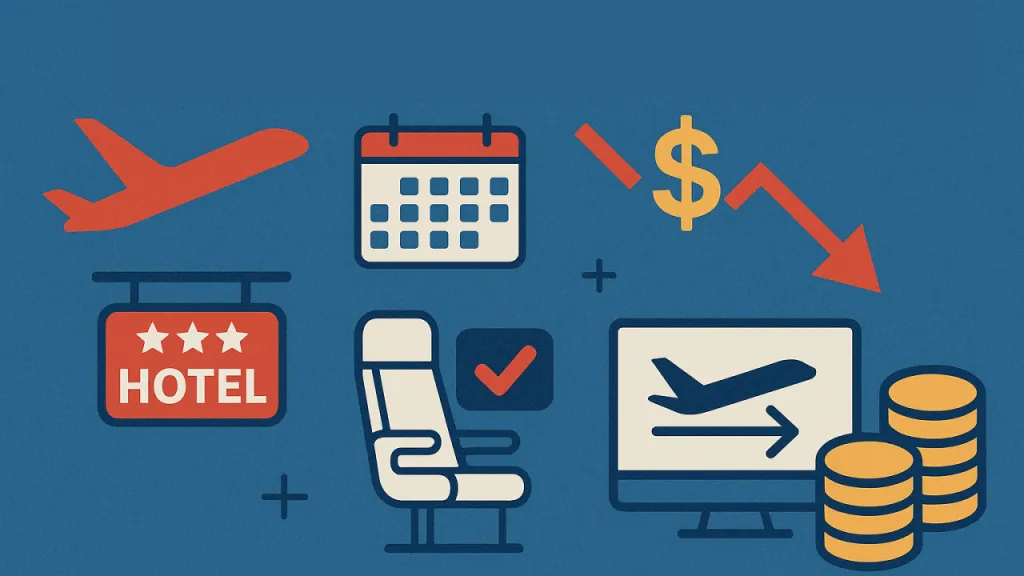
The global economy is grappling with renewed uncertainty, marked by persistent inflation, fluctuating energy prices, and geopolitical tensions as of early 2025. Early reports signal a cautious pullback in cross-border and long-haul travel, with leisure travellers tightening budgets and corporate travel still lagging pre-2020 levels, particularly in premium cabins. For airlines, this translates into intense commercial pressure: shrinking demand for high-yield routes, rising operational costs, and the urgent need to maximise margin from every booking. In this piece, we offer a few technology-enabled channel strategies which airline CCOs may find helpful.
The Nature of the Airline Business in Slowing Economies
The airline business is highly capital intensive with thin margins. In good economic times, this produces positive operating leverage. As passenger volume grows and is spread over a large base of fixed costs, margin stacks up faster than revenue. Sadly, this process is reversed in bad economic times! When volume becomes harder to come by, an airline must instead focus on generating the highest possible margin on the volume which remains. Every tenth of a margin point worth of revenue and cost becomes worth its weight in gold, causing airline CCOs to turn over every stone as quickly as possible to generate the maximum cash flow from its operation.
Channel Strategy Ideas
We need not educate airline CCOs on where to look for margin-boosting strategies that pull bigger levers like shifting revenue management strategies, streamlining operations to automate tasks, or trimming overhead. We do, however, have a few ideas which relate to what we know best: how to optimise channel strategies using technology to generate near term impacts.
- Source attractive holiday packages by partnering with local tourism boards, hoteliers, and other hospitality companies.When the economy begins to sour, airlines are not the only parties in travel which feel the pinch. Hotels begin to empty. Destinations which thrive on the foot traffic of holidaymakers begin to suffer. By banding together, all these parties can make compelling offers to capture a greater share of an albeit shrinking leisure travel pie.Airlines offer a potentially lucrative bridge to customers outside the local market. Tourism boards and local hoteliers are often willing to provide special deals for bundling together with airline travel. If the airline’s website is equipped with a technology platform which can aggregate holiday content from multiple sources, these deals can be easily incorporated into the airline’s existing holiday booking flow at the maximum possible margin for the airline.
- Use reinvested hotel commissions as a tool to drive incremental traffic.
We shared in another piece that airlines could earn as much as USD $4.70 per passenger boarded in incremental hotel commissions if they were to capture their fair share of the global holiday packaging market. In normal times, these commissions can fall directly to the airline’s bottom line as additional margin. In down times, though, they can be used as a strategic tool to drive share. Instead of pocketing the hotel commissions, airlines can instead reinvest them into lower overall package costs to drive incremental traffic on their aircraft. This is a tool which can be used in a very targeted and tactical fashion – e.g., only for certain markets, travel dates, or advanced purchase time bands. The best part? Airlines can fill their aircraft by discounting someone else’s product to sell more of their own!This is another mission best accomplished using a technology platform which allows the airline full latitude in setting it holiday package pricing. Airlines which outsource their holiday packaging to an online travel agency are unlikely to have such strategic flexibility. - Optimise paid seat revenue.
During harder economic times, airlines must maximise revenue from every customer interaction, and dynamic pricing of seat assignments offers a low-risk, high-impact strategy to boost ancillary revenue. As we described recently here, this approach involves using machine learning algorithms plugged seamlessly into direct and NDC-powered channels to set real-time, personalised prices for seat assignments based on customer segments, travel context, and willingness to pay. We shared in the same article that airlines can see as much as a 6 percent uplift in paid seat revenue as a result.Whether done together with dynamic pricing of paid seat assignments or not, an airline can also experiment with a variety of copy, ornamentation, booking flow placements, etc. to maximise conversions. Many airlines already have the capability to perform automated A/B testing within their websites and apps. It is also possible to motivate online travel agency partners to do the same by adding or restructuring incentives which are directly tied to ancillary revenue sales improvement. - Widen content differentiation in favour of direct and NDC-powered channels.
Opportunistic airlines may find an economic downturn as the right time to experiment with greater content differentiation in favour of their direct and NDC-powered channels. The economic incentives to do so are strong, especially for small- to mid-sized airlines with comparatively more expensive indirect channel distribution deals. The impact of channel shift can be immediate and substantial as the airline’s preferred channels begin to convert at higher rates to backfill bookings which would have otherwise occurred in their EDIFACT-powered indirect channels. Cost savings, upsell to higher fare types, and attachment of ancillaries provide compelling margin improvement.
The form which the content differentiation takes is dependent upon the technology available to the airline and any constraints imposed by its indirect channel distribution deals. Airlines which already have continuous pricing capabilities and NDC APIs can simply turn the dial to make continuous prices available more broadly and/or at deeper discounts to conventional published fares. Absent continuous pricing, airlines can consider applying or increasing EDIFACT surcharges and/or removing some or all fares from certain indirect channels. The latter can be done in a wide variety of ways that mitigate revenue risk. For example, it could be as small and safe as removing an airline’s lowest domestic fares from GDSs in foreign points of sale, with those lost sales very likely to be recaptured by lower cost channels in the airline’s home market. It could also be more ambitious, like deciding to distribute via some but not all online travel agencies, which could result in channel shift to both airline.com and its preferred (perhaps NDC-powered?) online travel agency partners.
We admit that removing the lowest fares – or even all fares – from some indirect channels may sound counterintuitive when the overall goal is to capture as much of the shrinking industry pie as possible. However, keep in mind that airlines tend to proactively reduce underperforming routes during downturns, thereby recentring their networks around their strongest markets. Even if load factors dip somewhat, many flights – perhaps even the majority – may still depart with every seat filled. Furthermore, airlines faced with market distress are less likely to cause long term relationship damage with their indirect channel partners, which tend to be more forgiving of aggressive actions taken due to economic need.
Conclusion
As airline CCOs navigate the choppy waters of an economic downturn, these channel strategies – leveraging holiday packaging, reinvesting hotel commissions, optimising paid seat revenue through dynamic pricing, and widening content differentiation – offer practical, technology-driven paths to bolster margins and capture share. By acting swiftly to implement these approaches, airlines can not only mitigate the immediate pressures of shrinking demand but also position themselves for resilience and growth when economic skies clear. The key lies in harnessing existing platforms and partnerships to drive incremental revenue and efficiency, ensuring every booking maximises value.