Beyond the Binary - Dual-Track Strategy for Stability + Agility
Why a Dual-Track Strategy Delivers Stability + Agility in Airline Commercial Transformation
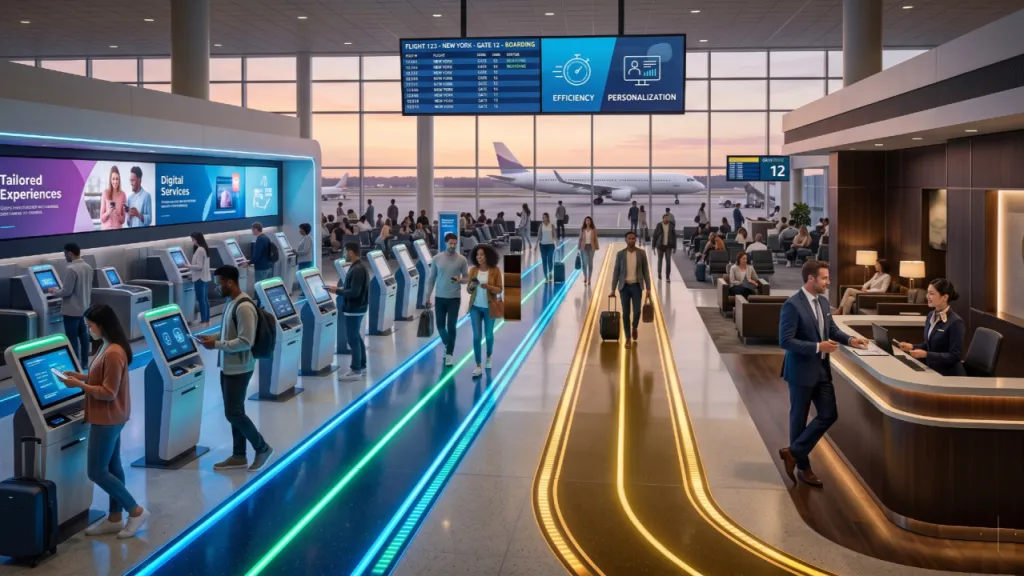
The airline industry is undergoing its most profound commercial shift since computerised reservations were introduced. Legacy PNR- and ticket-centric models are giving way to dynamic, offer- and order-based retailing. This transformation reaches far beyond technology. It demands fresh thinking about strategy, organisation, processes, and culture.
Many carriers feel pressured into a binary choice: fully commit to a single next-generation platform or fall behind. Yet a growing number are choosing a more nuanced path. A dual-track strategy lets them retain a proven, stable core system as the operational system of record while adding a dedicated, agile layer focused exclusively on retailing and dynamic offer creation. Often described as Stability + Agility, this hybrid model creates a powerful retailing shield. It safeguards commercial control, speeds innovation, and ensures airlines never surrender their entire revenue future to any one supplier.
The dual-track strategy intelligently combines stability and agility.
The Real Challenge: Resources and Silos
Airlines have built up decades of investment in existing systems. In mature organisations, 60–80% of IT resources are consumed simply maintaining and supporting legacy infrastructure. That leaves only 20–40% for new development. With IT staff typically representing about 2% of total headcount, the effective capacity for innovation shrinks to roughly 0.6% of the workforce. Even a major carrier may be able to allocate only 200–300 people to a transformation of this scale; a mid-sized airline might have just 20.[1]
Those scarce resources must cover operations, scheduling, crew, engineering, finance, and the entire commercial environment now shifting to modern retailing. Software vendors are similarly constrained, with teams focused on sales, product development, maintenance, and support across many clients. They rarely have spare capacity to lead a full business transformation.
Organisational silos compound the difficulty. Revenue management, distribution, digital, operations, and finance often optimise in isolation. No single function owns the complete end-to-end lifecycle from offer creation through order management, servicing, accounting, and disruption handling. The result is fragmented decision-making that turns a holistic retailing opportunity into disconnected projects.
Why a Pure Binary Choice Falls Short—and Why Leverage Matters More Than Ever
Modern passenger service systems offer essential order management, settlement, and operational reliability. They provide the stability airlines need for day-to-day execution. Yet committing entirely to any single platform carries significant risks.
Most importantly, many leading providers of next-generation technology are also the dominant players in global distribution systems (GDSs). A full lock-in therefore reduces leverage across both technology decisions and distribution strategy. Airlines can find themselves constrained in negotiating channel economics, protecting brand presence in third-party channels, and responding to shifts in how travel is discovered and sold. Commercial agility erodes when innovation is tied to one vendor’s roadmap and release calendar, and time-to-market for new offers slows dramatically.
At the other extreme, a full best-of-breed strategy, assembling the strongest specialised components from multiple vendors, remains a highly attractive and entirely viable option. With the support of a strong systems integrator partnership, best-of-breed can deliver maximum flexibility and innovation potential. Experienced integrators bring the program management, integration expertise, change capabilities, and cross-industry learnings needed to make it work. However, this route is understandably not for every airline. It demands sophisticated governance, higher integration complexity, and a greater appetite for risk and organisational change.
For many carriers, the dual-track hybrid model strikes the most practical balance: the reliability of a modern core combined with the speed and creativity of a dedicated retailing layer.
How the Dual-Track Model Works
Track One – Stability: A Modern Core as System of Record
A proven modern next-generation platform serves as the authoritative backbone. It manages order creation, fulfilment, settlement, compliance, accounting, and disruption handling. Business-as-usual operations continue uninterrupted while the airline gains the benefits of a contemporary, order-centric system.
Track Two – Agility: A Dedicated Retailing Layer
A separate, lightweight, and fast-moving layer concentrates solely on dynamic offer construction, personalisation, merchandising, and omnichannel experience. It builds real-time offers that factor in customer value, context, willingness-to-pay, competitive positioning, and the full spectrum of ancillaries. Rapid experimentation, A/B testing, and new product bundles become possible across every channel: web, mobile, NDC, GDS, and beyond.
Clean, modern APIs and shared data models connect the two tracks. The stable core remains the single source of truth for orders and fulfilment; the agile layer owns commercial creativity and customer-facing innovation. The architecture is deliberately modular: retailing components can be enhanced or replaced without touching core operations.
This separation is the retailing shield in action. Airlines keep full ownership of their commercial strategy and pricing logic. They innovate at the speed of retail rather than the pace of a traditional core system.
Tangible Benefits of the Hybrid Approach
Carriers pursuing this model report consistent advantages:
- Accelerated time-to-market. Retailing features that once took 12–18 months can be tested and launched in weeks.
- Higher revenue per passenger through dynamic bundling, contextual ancillaries, and personalised recommendations.
- Reduced implementation risk. The stable core supports daily operations while the agile layer is introduced incrementally.
- Stronger negotiating position. No single vendor controls the entire retailing value chain.
- More manageable organisational change. Familiar operational processes continue on the core side while new capabilities are adopted gradually.
The Critical Role of Systems Integrators
Success depends on more than technology. It requires expert program management, cross-functional alignment, and proven integration patterns. Experienced systems integrators play an essential part, whether an airline chooses the dual-track model or a full best-of-breed approach. They map the end-to-end value chain, eliminate friction at hand-offs, harmonise KPIs across departments, and establish shared data models that serve the entire enterprise. Many bring retail-sector experience, quality-assurance frameworks, AI-powered accelerators, and templates for complex programs, capabilities that compress timelines and reduce risk for airlines of any size.
Getting Started: Key Questions to Answer
The journey begins with an honest self-assessment. Senior leadership should address several foundational questions:
- What are the primary commercial goals: lower distribution costs, higher flight and ancillary revenue, improved customer satisfaction, or more efficient resource use?
- What is the realistic gap between required and available internal resources?
- What is the full scope: technology only, or does it include organisational and process change plus training?
- Which market solutions best complement the chosen core platform?
Many airlines engage external expertise at this stage to ensure the chosen architecture, dual-track or best-of-breed, is designed correctly from day one.
The Outlook: Flexibility in an AI-Shaped Future
The shift to offer- and order-based retailing is irreversible. The question is not whether airlines will modernise, but whether they will simply trade one monolithic system for another or build an architecture that combines operational excellence with commercial creativity.
A dual-track strategy offers many carriers the lowest-risk, highest-reward route. It mirrors cloud economics: scale commercial capabilities according to need while keeping the operational core rock-solid.
Looking ahead, the rapid advance of large-scale AI platforms will further reshape the third-party distribution landscape. New AI-driven intermediaries and personalised search experiences are poised to change how passengers discover and purchase travel. In this critical phase, airlines will place an even higher premium on maintaining complete commercial and technological flexibility: the ability to experiment with new distribution models and define how their brands compete in an entirely new environment. The dual-track approach equips them to do exactly that.
The future of airline retailing does not have to be binary. The carriers that combine stability with agility will be the ones that protect their margins, own their commercial destiny, and deliver the personalised experiences passengers expect.
[1] T2RL, The Role of Systems Integrators in Airline Commercial Transformation, February 2026. For further information visit www.t2rl.com.